When to Give Up Following Up on a Recruiter (And Why That’s Not Failure)
At some point, following up stops being professional and starts becoming self-sabotage.
Most job seekers don’t quit following up because they’re lazy. They quit because the silence is loud and confusing. And the worst advice floating around says, “Just keep checking in.”
Here’s the reality recruiters won’t spell out: if they wanted you, you’d know. Silence isn’t a mystery. It’s information.
This guide breaks down exactly when to give up following up on a recruiter, why that decision is strategic, not emotional, and how letting go actually improves your job search outcomes.
The Lie That Keeps People Following Up Too Long
"No News Is Good News" Is Rarely True
I used to believe this. I'd tell myself that silence meant they were still considering me, that they just needed more time, that any day now I'd hear something positive.
That's rarely what silence means.
Recruiters don't forget strong candidates. If you nailed the interview and they want you, they're checking in. They're moving you forward. They're keeping you warm because they don't want to lose you to another company.
Delays don't require endless reminders. A recruiter knows you're interested. You applied. You interviewed. You followed up once. They got the message. Sending another follow-up doesn't make them suddenly remember you exist.
Silence usually reflects prioritization, not confusion. You're not their top choice. They're waiting to see if someone else accepts. They're dealing with internal issues. They've moved on but haven't officially closed the loop yet.
Hope is not a strategy. I learned this the hard way after spending three months waiting for a role I was never going to get. I could've applied to 50 other jobs in that time. Instead, I kept hoping this one would work out.
The Story Everyone Tells Themselves
A job seeker once told me she'd been following up with a recruiter for six weeks. She was convinced the role was still in play because the recruiter hadn't explicitly rejected her.
When we looked at the timeline, the pattern was clear. The recruiter responded quickly for the first two weeks. Then slower. Then not at all. That's not a delayed process. That's a soft rejection.
She finally got a generic "we've moved forward with other candidates" email in week seven. Six weeks of mental energy wasted on a role that was dead after week two.

Two Weeks of Silence Is Data
Two weeks is the realistic decision window for most hiring processes. If a recruiter is interested, you'll hear something within that timeframe. Maybe not a final decision, but an update, a next step, something.
Longer silence signals backup status or pause. They're keeping you warm in case their first choice falls through. Or the role is on hold, and they don't want to tell you yet. Or they've moved on and just haven't sent the rejection email.
Recruiters respond fast when interest is high. I've seen recruiters schedule second interviews within 48 hours when they find someone they like. I've seen offer letters go out in a week. Speed happens when they want you.
Waiting longer rarely changes outcomes. If you haven't heard anything in two weeks, waiting another two won't help. The decision has already been made. You just don't know it yet.
Data beats assumptions. Track your applications and follow-ups. If you're consistently getting silence after two weeks across multiple roles, that's telling you something about your resume positioning or interview performance, not about recruiter response times.
What Two Weeks of Silence Actually Means
I had a client who interviewed for a director role. Great conversation. Strong rapport. The recruiter said they'd be in touch within a week.
Two weeks passed. Nothing. She sent a follow-up. No response. Another week. She sent another follow-up. Still nothing.
Three weeks after that, she got a rejection email. The role had been filled two days after her interview. The recruiter just hadn't told her.
That's not unusual. That's standard. Recruiters are busy. You're not a priority if you're not the hire. Silence after two weeks is almost always your answer.
If They Wanted You, You'd Know
Strong candidates get clarity, even if rejected. When a recruiter really likes you but the timing isn't right, or the fit isn't perfect, they tell you. They keep the door open. They refer you to other roles. They stay engaged.
Recruiters protect the candidates they want. They check in. They give updates. They make sure you're still interested. They don't leave you hanging because they don't want to risk losing you.
Engagement drops when decisions are made. If a recruiter was responsive and then went silent, the decision happened. They moved forward with someone else. They're not ignoring your follow-up on purpose. They're just not prioritizing it.
Follow-ups don't create urgency. Sending another message doesn't make a recruiter suddenly realize you're the right hire. If they needed a reminder about you, you weren't the right hire.
Interest shows up without chasing. I've never seen a strong candidate have to beg for updates. When companies want you, they pursue you. When they don't, you're doing all the work.
The Candidate Who Knew When to Stop
I worked with someone who interviewed for a VP role at a tech company. First interview went great. The second interview was solid. Then silence.
He sent one follow-up after two weeks. No response. He stopped there.
Two months later, the recruiter reached out. Their first choice had turned down the offer. They wanted to move forward with him.
He'd already accepted another role.
That's what happens when you stop chasing and start building options. The roles that want you to find you. The ones that don't? You've moved on.
Why Endless Following Up Hurts Your Positioning
Repeated nudging lowers perceived confidence. When you keep following up, recruiters start to wonder if you have other options. If you're this eager, maybe you're not as in-demand as your resume suggests.
Desperation reads louder than enthusiasm. There's a difference between "I'm excited about this role" and "I really need this job." Recruiters can tell. And they avoid candidates who seem desperate because desperation usually means limited options.
Over-communication creates friction. Recruiters talk to each other. If you're emailing the recruiter, the hiring manager, and HR all separately, they're going to compare notes. And you're going to look pushy.
Recruiters remember tone, not just timing. One client sent a follow-up that said, "I'm disappointed I haven't heard back and would appreciate an update." She thought she was being direct. The recruiter thought she was entitled. She didn't get the job.
Professional distance preserves leverage. The less you chase, the more you protect your positioning. Confidence comes from having options, not from needing one specific role to work out.
The Follow-Up That Killed the Offer
A job seeker told me he'd sent four follow-ups in three weeks. The first one was professional. The second was fine. The third started sounding frustrated. The fourth was basically begging for clarity.
The recruiter finally responded and said they'd decided to move in a different direction. He asked me if the follow-ups had hurt his chances.
Probably. Not because he followed up, but because each message sounded more desperate than the last. If he'd stopped after one or two, he would've preserved his credibility. Instead, he showed them he had no other options.
When One Last Follow-Up Is Appropriate
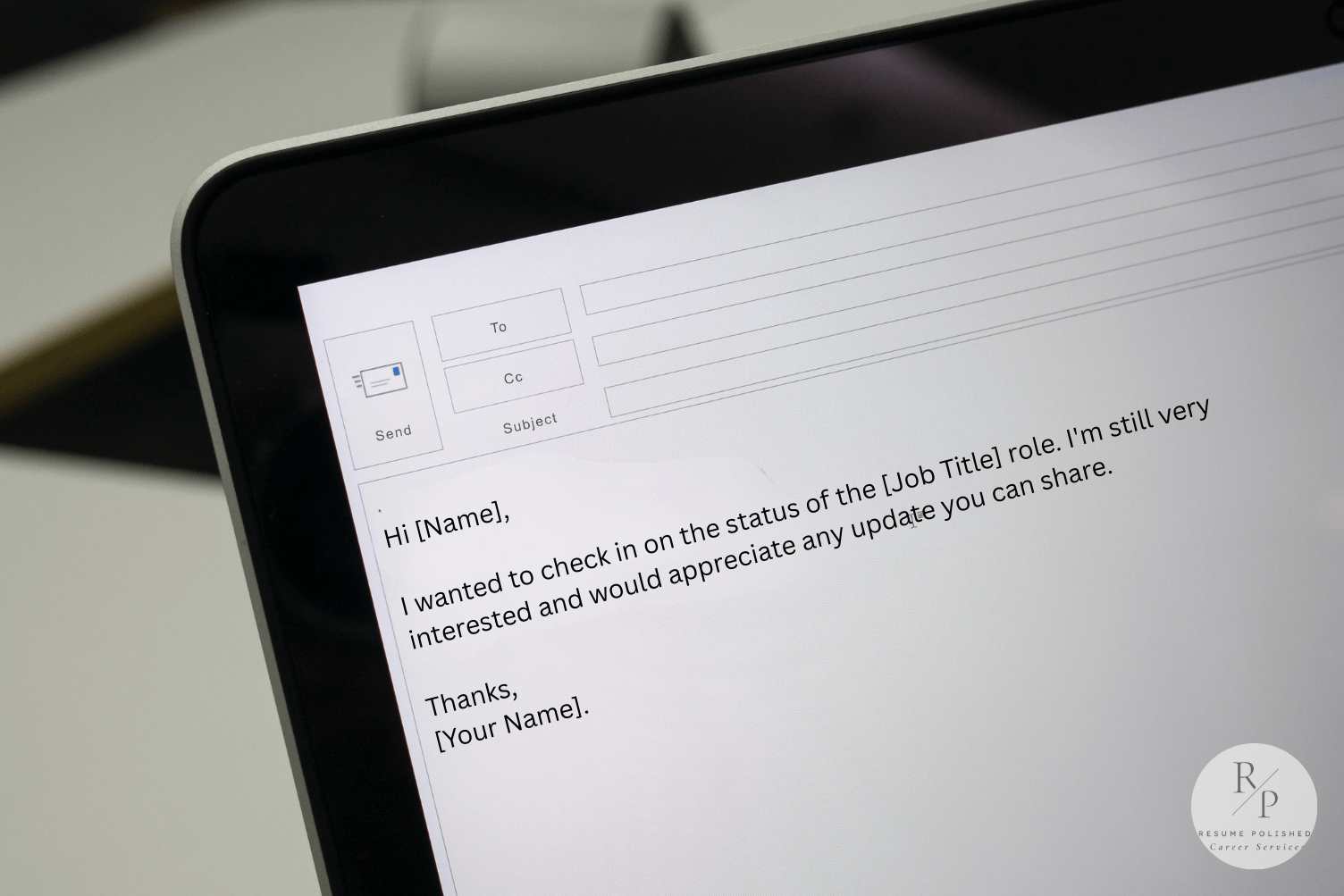
One clear, respectful check-in is fine if you haven't heard anything. Send it after the two-week mark. Keep it short. No emotional language. No justification or pressure.
"Hi [Name], I wanted to check in on the status of the [Job Title] role. I'm still very interested and would appreciate any update you can share. Thanks, [Your Name]."
That's it. If they don't respond to that, you have your answer.
Close the loop cleanly. This isn't about getting a response. It's about confirming what you already know so you can move on without second-guessing yourself.
I send this kind of message knowing I probably won't hear back. But it gives me closure. Once I hit send, I mentally close that door and focus my energy elsewhere.
When It's Time to Stop Completely
Two unanswered follow-ups mean you're done. You sent one. You waited. You sent another. If they haven't responded after two attempts, they're not going to.
A role reposted with no response is a giant red flag. If you see the same job posting go live again and no one told you the process changed, they've moved on.
Recruiter disengages on all channels. If they stop responding to emails, LinkedIn messages, everything, they're avoiding you. That's not a delay. That's a soft rejection.
Process stalls indefinitely. If a recruiter keeps saying "we're still deciding" every time you follow up, they're stalling because they don't want to reject you yet. You're a backup. Stop waiting.
Your energy starts shrinking instead of expanding. If following up is making you anxious, frustrated, or obsessive, it's time to stop. Your mental energy is better spent on opportunities that give you energy back.
Knowing When to Walk Away
I had a client who'd been in a "final round" for eight weeks. Every two weeks, the recruiter said they were "close to a decision." After the fourth time hearing that, I told her to stop following up and assume the role wasn't happening.
She was hesitant. She didn't want to give up. But once she redirected her energy to other applications, she got two interviews within a week. One led to an offer.
The original company? They finally sent a rejection three months later. She'd already been in her new job for six weeks.
Redirect, Don't Obsess
Strengthening resume positioning helps you get better responses in the first place. If you're consistently getting silence, your resume might not be showing the right value.
Improving interview performance means you convert more first interviews into second rounds and offers.
Expanding recruiter pipelines gives you options. Instead of obsessing over one recruiter, you should be talking to five. Then you're not waiting. You're choosing.
Applying where momentum exists is smarter than chasing roles that went cold. If a company responds fast, keep engaging. If they go silent, move on.
Building leverage, not waiting, is how you actually land offers. Leverage comes from having multiple conversations in progress. Not from following up with someone who's already decided you're not the one.
If you're spending more time following up than applying, your priorities are backwards.
FAQs: Give Up Following Up on a Recruiter
-
After two weeks of silence and one to two professional follow-ups, it's time to stop. Continued outreach rarely changes the outcome and risks making you look desperate instead of professional.
-
Not necessarily. Silence often reflects internal delays, shifting priorities, or stronger candidates moving forward. It's rarely about you doing something wrong. It's about fit, timing, and competition.
-
Yes, but it's rare. And it usually happens without additional follow-up from you. If they need you later, they'll reach out. Your job is to keep moving forward, not to sit around waiting.

About Career Coach and Author
Hi, I’m Elizabeth Harders. I’m a former recruiter turned career strategist who has spent years on the other side of the hiring table. I’ve seen thousands of resumes and cover letters, some great, most forgettable. Now, I help professionals craft applications that actually stand out and lead to interviews.
My specialty? Helping ambitious professionals land six-figure roles at Fortune 500 companies. Whether it’s fine-tuning a resume, optimizing a LinkedIn profile, practicing for an interview, or crafting a powerful cover letter, I make sure my clients present themselves as the best possible candidate for the job they want.
If you’re tired of sending applications into the void, book a free career strategy session.
Walking Away Is a Strategic Move
Giving up on following up doesn't mean you weren't good enough.
It means you're paying attention.
Strong candidates don't beg for clarity. They build options. They protect their positioning. They move where energy is returned.
I spent years thinking persistence was the key to landing jobs. I thought if I just followed up enough, recruiters would see how serious I was. That's not how it works.
Persistence matters in applying to multiple roles and improving your materials. It doesn't matter in chasing one recruiter who's already moved on.
If silence keeps repeating in your job search, the issue usually isn't follow-up timing. It's how your resume, interviews, and overall strategy are aligned.
Stop chasing silence. Start building leverage. The roles that want you will let you know. The ones that don't? You'll already be talking to someone else.